Why Your Business Needs a Monthly Financial Health Check in 2026
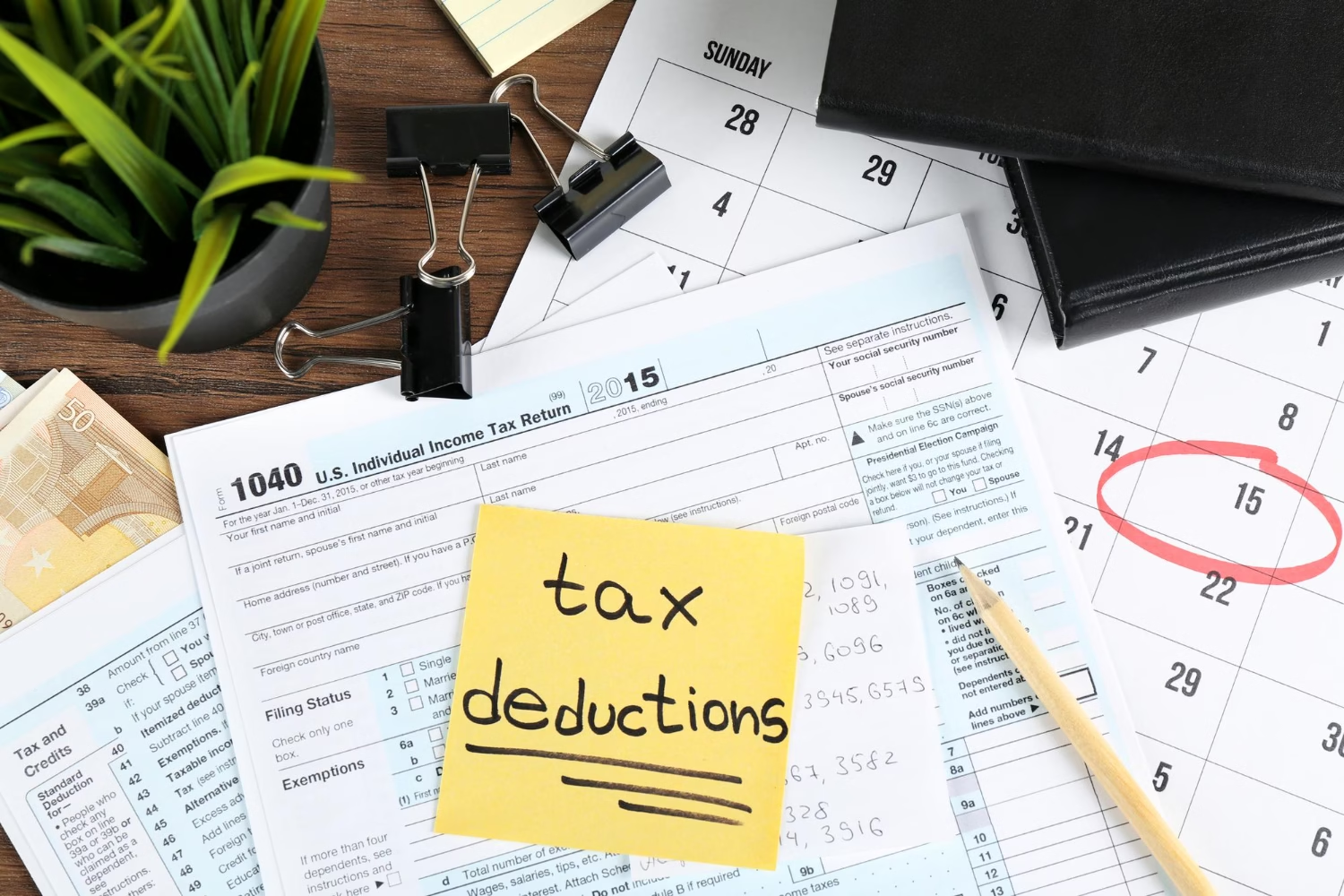
In 2026, reviewing your business tax deductions should be an ongoing part of your financial strategy—not something you do a few days before filing your tax return.
Every business owner knows that taxes can take a significant bite out of profits. Yet many businesses still overpay simply because legitimate expenses are overlooked, poorly documented, or discovered too late.
From everyday operating expenses to home office costs, vehicle use, technology, employee benefits, and other qualifying deductions, small details can make a meaningful difference in your taxable income. The key is understanding which expenses may qualify, maintaining proper documentation, and making tax decisions before important deadlines pass.
At TaxPro Edge, we help business owners connect accurate bookkeeping with proactive tax planning so potential business tax deductions are easier to identify throughout the year.
Important: Tax deductions depend on your business structure, industry, how an expense is used, and other factors. Not every expense applies to every business, and proper records are essential.
Why Business Tax Deductions Matter in 2026
A tax deduction generally reduces the amount of income subject to tax. But one of the biggest mistakes business owners make is treating deductions as a year-end checklist.
When your books are updated regularly, you have more time to:
- Identify potentially deductible expenses
- Correct expense classifications
- Gather supporting documentation
- Review major purchases
- Plan for estimated taxes
- Evaluate available tax strategies
The goal isn’t to spend money simply to create a deduction.
A smart approach asks:
Is this expense necessary for the business, financially sensible, and potentially deductible?
That distinction matters.
1. Home Office Expenses
If you operate your business from home, you may overlook eligible home office deductions.
Depending on your circumstances, qualifying expenses may include a portion of:
- Rent
- Mortgage interest
- Utilities
- Insurance
- Repairs
- Other home-related costs
Generally, the business-use area must meet applicable IRS requirements. For many taxpayers, this includes requirements related to regular and exclusive business use.
The key is documentation. Keep records that support how the space is used and how any deduction was calculated.
TaxPro Edge Tip: Don’t wait until tax season to recreate an entire year’s worth of home office expenses. Track eligible costs consistently.

2. Business Vehicle Expenses
Business owners often miss deductions because they don’t consistently track business use of their vehicles.
Depending on eligibility and the method used, deductible vehicle costs may involve:
- Business mileage
- Fuel
- Repairs
- Insurance
- Registration costs
- Lease payments
- Depreciation
The rules and documentation requirements can vary depending on whether you use the standard mileage method or actual expenses.
A common mistake is assuming that every trip in a personally owned vehicle is automatically deductible.
Maintain accurate records of business use, including the date, purpose, and mileage where
3. Software and Technology Expenses
Modern businesses often pay for dozens of digital tools.
Potentially deductible business expenses may include qualifying costs for:
- Accounting software
- Project management tools
- Customer relationship management systems
- Cloud storage
- Business communication platforms
- Cybersecurity tools
- Industry-specific software
These recurring subscriptions can be easy to overlook, particularly when charges appear automatically on business credit cards.
Review your software expenses regularly.
You may discover two opportunities:
- Expenses that should be properly recorded for tax purposes.
- Subscriptions you’re paying for but no longer use.
4. Professional Services
Fees paid for qualifying professional services may be deductible business expenses.
Examples can include services provided by:
- Accountants
- Tax professionals
- Bookkeepers
- Attorneys
- Consultants
- Payroll providers
- Business advisors
These expenses should be accurately categorized in your bookkeeping system.
At TaxPro Edge, we often see businesses lose track of professional fees because payments are recorded inconsistently or mixed with other general expenses.
Clean books make potential business tax deductions easier to identify.

5. Education and Training
Business-related education can sometimes be overlooked.
Depending on the circumstances, qualifying expenses may include:
- Professional courses
- Industry training
- Workshops
- Conferences
- Continuing education
- Certifications
The education generally needs to meet applicable requirements and be connected to maintaining or improving skills relevant to your current business or profession.
Before assuming a course or program qualifies, review its relationship to your existing business activities.
6. Marketing and Advertising Costs
Many business owners focus on major advertising campaigns while forgetting smaller ongoing marketing costs.
Potential expenses may include:
- Website development and maintenance
- Digital advertising
- Search engine optimization
- Social media management
- Print advertising
- Promotional materials
- Email marketing tools
- Branding services
These costs should be tracked throughout the year instead of being buried in a general expense category.
Better categorization can improve both tax preparation and your ability to measure marketing performance.
7. Business Insurance
Insurance is another area that can be overlooked when records are disorganized.
Depending on your business, qualifying premiums may include:
- General liability insurance
- Professional liability insurance
- Property insurance
- Cyber insurance
- Certain business interruption coverage
Make sure premiums are recorded correctly and distinguish business insurance from personal insurance.
8. Bank Fees and Payment Processing Costs
Small fees add up.
Businesses may pay for:
- Bank account fees
- Credit card processing
- Payment processor charges
- Merchant fees
- Wire transfer fees
These costs can be easy to miss because individual charges may be small.
Review bank and payment processor statements regularly to ensure qualifying fees are captured accurately.
9. Employee Benefits and Compensation Costs
If your business has employees, review payroll-related expenses as part of your tax planning.
Potential deductible costs may include qualifying:
- Employee wages
- Bonuses
- Certain employee benefits
- Payroll taxes
- Retirement plan contributions
The rules vary depending on the type of compensation or benefit.
Growing businesses should coordinate payroll, bookkeeping, and tax planning rather than treating them as separate processes.
10. Retirement Contributions
Certain retirement plan contributions can create valuable tax-planning opportunities for eligible business owners and employees.
Depending on your circumstances, this may involve plans such as:
- SEP IRAs
- SIMPLE IRAs
- Qualified retirement plans
Contribution limits, eligibility rules, and deadlines can affect the potential tax benefit.
This is why retirement planning should be discussed before year-end whenever possible rather than treated as an afterthought.
11. Business Travel Expenses
Business travel can involve several potentially deductible expenses when the travel meets applicable business requirements.
Depending on the circumstances, costs may include:
- Transportation
- Lodging
- Qualifying meals
- Rental vehicles
- Business-related fees
However, personal travel costs generally don’t become deductible simply because you answer a few emails while away.
Maintain records that support:
- The business purpose of the trip
- Dates
- Travel destination
- Relevant receipts and documentation
12. Office Supplies and Everyday Business Costs
Not every deduction involves a major purchase.
Common expenses that may be overlooked include:
- Office supplies
- Postage
- Printing
- Business phone expenses
- Internet costs
- Small equipment
- Shipping costs
When these transactions are paid from different cards or accounts, they can easily be missed or incorrectly categorized.
Regular bookkeeping helps prevent small deductible expenses from disappearing into the cracks.
13. Equipment and Technology Purchases
Purchasing equipment can have important tax implications.
Depending on the asset, applicable tax rules, and your business circumstances, you may need to consider:
- Current-year expensing
- Depreciation
- Other applicable depreciation provisions
Examples include:
- Computers
- Machinery
- Office equipment
- Furniture
- Specialized tools
- Other qualifying business assets
Don’t make a major purchase solely because someone tells you that it is “fully deductible.”
The timing, cash-flow impact, business need, and tax treatment should all be evaluated together.
14. Startup and Organizational Costs
Newer businesses may overlook certain expenses incurred while getting the business started.
Depending on the circumstances, startup and organizational costs may receive specific tax treatment.
Examples may include qualifying costs related to:
- Business formation
- Market research
- Professional fees
- Advertising before opening
- Initial business planning
The treatment of these expenses can depend on the nature and timing of the costs, so accurate records are particularly important.
A Real-World Scenario: How Messy Books Can Hide Tax Deductions
A growing consulting business came to Tax Pro Edge with bookkeeping that was several months behind. The owner had used multiple credit cards, paid some business expenses from a personal account, and stored receipts in emails and phone folders.
During a financial cleanup, several legitimate business expenses had not been consistently categorized, including software subscriptions, payment processing fees, professional services, and business travel costs.
The biggest issue wasn’t that the business had intentionally ignored these expenses. The problem was that the financial records weren’t organized enough to make them visible.
After the books were cleaned up and a monthly review process was established, the owner had a clearer picture of expenses throughout the year and could identify potential tax deductions before year-end.
The lesson: You can’t effectively plan for deductions when you don’t have a clear view of your expenses.
Common Mistakes That Cause Businesses to Miss Deductions
Waiting Until Tax Season
Trying to identify an entire year’s expenses at the last minute increases the risk of missing records.
Mixing Personal and Business Expenses
Separate accounts make it easier to identify and document legitimate business costs.
Poor Expense Categorization
An expense that is buried in an incorrect or vague category can be overlooked during tax preparation.
Losing Receipts and Documentation
Some expenses require supporting records. Develop a system for storing documentation throughout the year.
Buying Things Just for a Tax Deduction
A deduction reduces taxable income—it doesn’t make the full cost of an unnecessary purchase disappear.
Ignoring Small Recurring Expenses
Small monthly charges can become significant annual expenses.
How to Build a Better Deduction Tracking System
A strong system starts with accurate bookkeeping.
Step 1: Separate Business and Personal Finances
Use dedicated business bank accounts and cards whenever possible.
Step 2: Keep Your Books Current
Monthly bookkeeping helps identify expenses while the information is still fresh.
Step 3: Use Clear Expense Categories
A well-organized chart of accounts makes financial reports more useful for both management and tax planning.
Step 4: Store Documentation Digitally
Use a consistent system to save receipts, invoices, and other supporting records.
Step 5: Review Your Expenses Monthly
Look for missing transactions, unusual expenses, and costs that may require additional documentation.
Step 6: Plan Before Year-End
Major purchases, retirement contributions, and other tax decisions may require planning before deadlines arrive.
How Tax Pro Edge Helps You Find Potential Tax-Saving Opportunities
At TaxPro Edge, we believe tax planning should happen throughout the year.
Our approach connects:
- Accurate bookkeeping
- Financial reporting
- Tax planning
- Payroll coordination
- Business advisory
This gives business owners a clearer picture of their financial position and helps identify potential opportunities before tax season arrives.
We don’t just look at what happened last year.
We help you use current financial information to plan for what comes next.
Conclusion
Many business tax deductions are not missed because business owners don’t know they exist. They’re missed because financial records are outdated, expenses are poorly categorized, receipts are scattered, or tax planning starts too late.
The best way to improve your tax readiness is to keep your books accurate, review expenses regularly, and make major financial decisions with both business needs and potential tax consequences in mind.
A proactive approach can help you identify potential business tax deductions, improve financial visibility, and reduce the risk of costly last-minute surprises.
Don’t wait until your tax return is being prepared to discover what you may have missed. Schedule your Tax Deduction Review with Tax Pro Edge and start planning ahead.