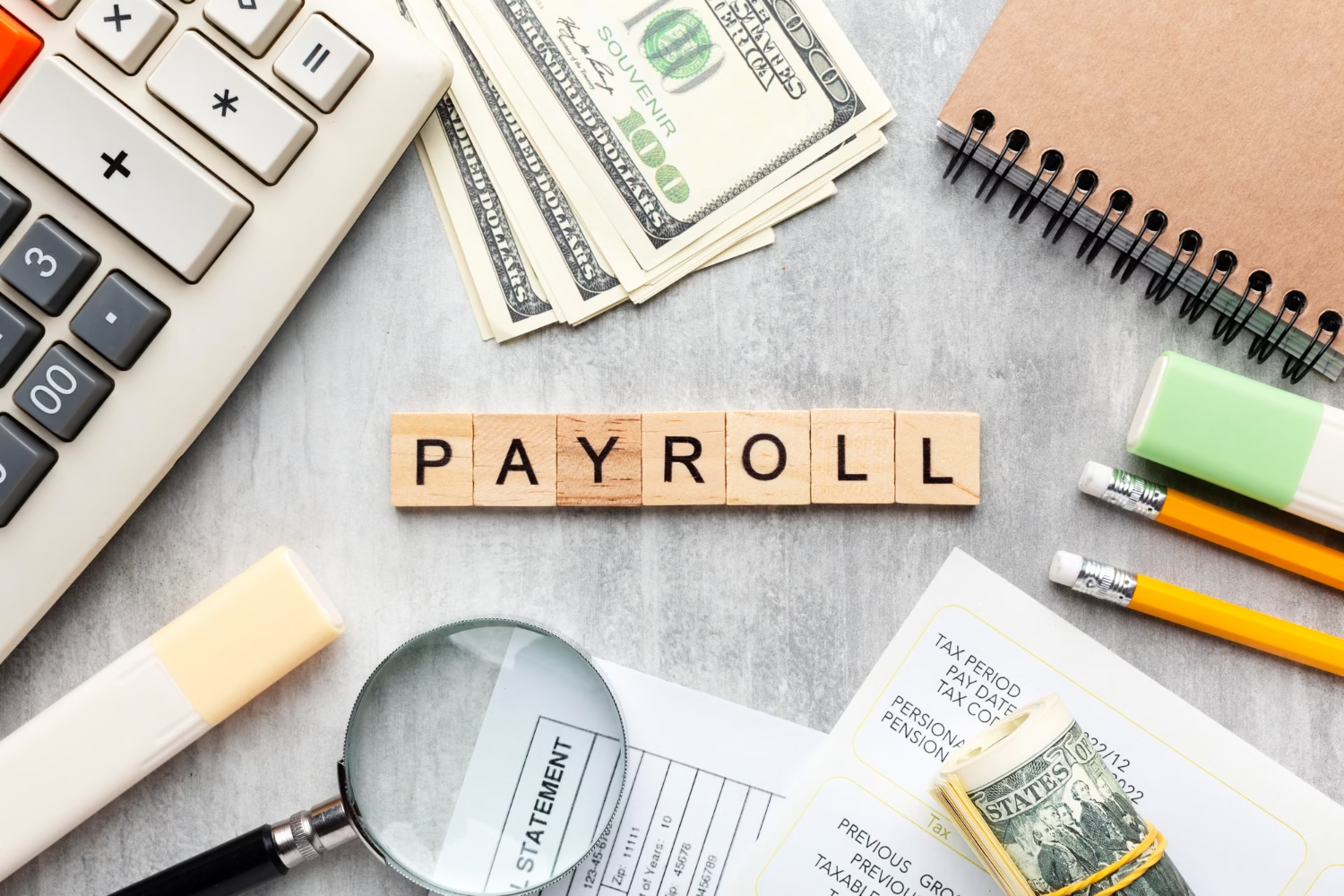
Payroll in 2026: What Growing Businesses Need to Get Right
Payroll in 2026 has became more complicated as your business grows. What worked when you had five employees can quickly become risky when you have 25, 50, or 100 employees across different locations.
In 2026, growing businesses need to think about payroll as more than simply paying employees on time. Accurate payroll requires the right tax withholdings, employee classifications, recordkeeping, reporting, payroll systems, and compliance processes.
A single payroll mistake can lead to employee dissatisfaction, tax notices, penalties, or unnecessary administrative work.
At TaxPro Edge, we help growing businesses build payroll processes that are accurate, organized, and designed to scale. Here’s what business owners should get right in 2026.
Why Payroll Is Becoming More Complex
As businesses grow, payroll complexity typically increases along with them.
You may have:
- More employees
- Multiple pay rates
- Overtime
- Bonuses and commissions
- Employee benefits
- Remote workers
- Employees in multiple states
- Independent contractors
- Different payroll schedules
Each additional layer creates more opportunities for errors.
That’s why businesses should review their payroll systems before growth exposes weaknesses in their existing processes.
1. Get Employee Classification Right
One of the most important payroll responsibilities is correctly classifying workers.
Businesses may work with:
- Full-time employees
- Part-time employees
- Temporary employees
- Independent contractors
- Exempt employees
- Non-exempt employees
Classification affects payroll taxes, overtime, benefits, reporting, and other employer responsibilities.
Misclassifying an employee as an independent contractor, for example, can create significant tax and compliance problems.
If your workforce has changed substantially, review your classifications rather than assuming your previous approach is still appropriate.
2. Review Payroll Tax Withholding
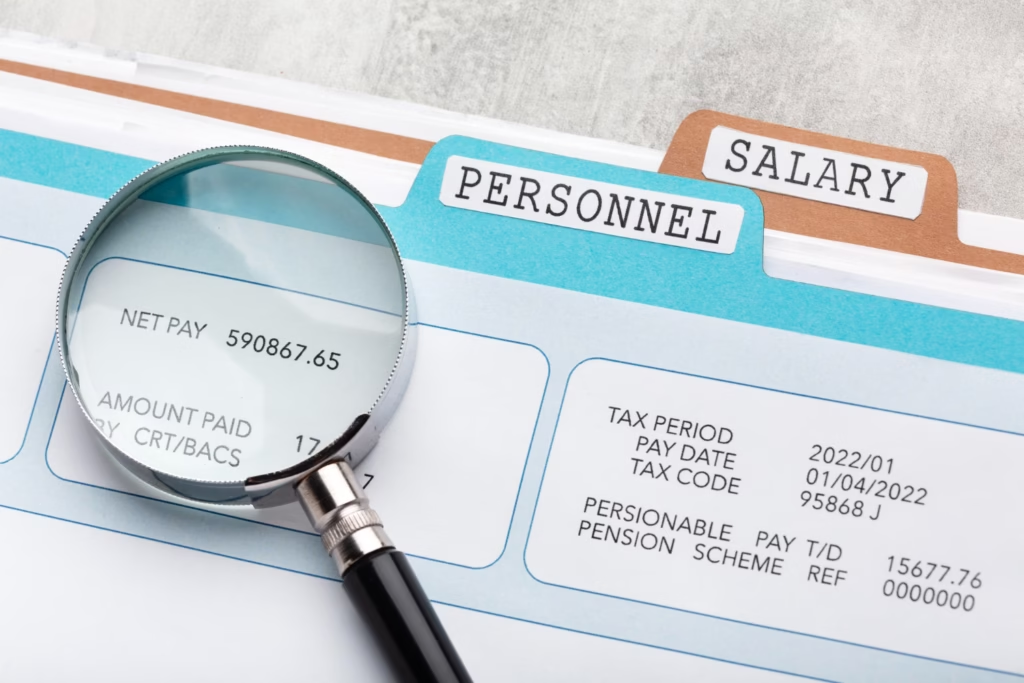
Payroll taxes need to be calculated and deposited accurately and on time.
Employers generally need to manage items such as:
- Federal income tax withholding
- Social Security taxes
- Medicare taxes
- Federal unemployment taxes
- Applicable state taxes
- Local payroll taxes where applicable
The IRS publishes updated employer guidance and tax information each year, so payroll systems and processes should be reviewed regularly rather than relying on outdated settings.
3. Stay on Top of State and Local Requirements
Growing businesses increasingly operate across state lines.
An employee working remotely from another state may create payroll and employer obligations that didn’t exist when everyone worked from one location.
Depending on the circumstances, businesses may need to consider:
- State income tax withholding
- Unemployment insurance
- Employer registrations
- State wage requirements
- Local payroll taxes
- State-specific reporting
Before hiring an employee in a new state, make sure your payroll and compliance requirements have been reviewed.
4. Track Overtime and Working Hours Accurately
Payroll errors frequently occur when businesses don’t have reliable timekeeping systems.
For applicable employees, businesses need accurate records of:
- Hours worked
- Overtime
- Paid time off
- Holidays
- Breaks where required
- Other compensable time
Don’t rely on informal spreadsheets or employee memory when your workforce is growing.
Automated time-tracking and payroll systems can help connect employee hours directly to payroll processing.

5. Handle Bonuses and Commissions Correctly
Growing companies often introduce performance bonuses, sales commissions, referral payments, and other incentives.
These payments need to be incorporated correctly into payroll.
Before issuing a large bonus, review:
- Tax withholding
- Payroll tax treatment
- Payment timing
- Employee agreements
- Reporting requirements
A bonus may be good news for an employee, but it can create additional payroll complexity for the employer.
6. Keep Employee Records Accurate
Payroll compliance depends heavily on accurate employee information.
Your payroll records should be kept current when employees:
- Change addresses
- Receive raises
- Change roles
- Update withholding information
- Enroll in benefits
- Change employment status
- Leave the company
Establish a process for updating payroll information immediately rather than waiting until the next annual review.
7. Reconcile Payroll Regularly
Payroll shouldn’t be processed and forgotten.
A monthly payroll reconciliation can help identify discrepancies between:
- Payroll reports
- Bank transactions
- Payroll tax payments
- Employee deductions
- Benefits
- General ledger accounts
Regular reconciliation helps catch errors early, when they’re usually easier and less expensive to correct.
At TaxPro Edge, we recommend treating payroll reconciliation as part of your regular financial review—not simply a year-end task.
8. Prepare for Payroll Tax Deadlines
Payroll compliance involves more than calculating employee pay.
Businesses must also make required tax deposits and file applicable payroll returns on time.
Create a payroll compliance calendar that tracks:
- Federal tax deposits
- State tax deposits
- Quarterly filings
- Annual reporting
- Employee tax forms
- State unemployment filings
Automated reminders and professional payroll support can reduce the risk of missed deadlines.
9. Secure Payroll Information
Payroll systems contain highly sensitive employee information.
A payroll security strategy should include:
- Strong passwords
- Multi-factor authentication
- Restricted system access
- Secure cloud-based systems
- Regular software updates
Reliable data backups
Access should be limited to employees who actually need payroll information to perform their roles.
10. Don't Ignore Payroll Changes When Your Business Grows
Growth often triggers payroll changes that business owners don’t anticipate.
For example, moving from 10 employees to 50 employees may require you to reconsider:
- Payroll software
- HR processes
- Time tracking
- Benefits administration
- Payroll approvals
- Internal controls
- Compliance reviews
A payroll system that worked for a small team may become inefficient—or risky—as transaction volume increases.
Your payroll infrastructure should grow alongside your business.
A Real-World Example
A professional services company grew from 15 employees to more than 45 in less than two years. Payroll had originally been handled using a basic system with manual time tracking and several spreadsheet-based processes.
As the company expanded, overtime, bonuses, employee benefits, and remote workers made payroll increasingly difficult to manage. Small discrepancies began appearing between payroll reports and the company’s accounting records.
TaxPro Edge reviewed the company’s payroll workflow and helped establish standardized procedures for time tracking, payroll approvals, reconciliations, and recordkeeping.
The company didn’t simply end up with a better payroll process—it gained a scalable system that could support continued hiring without adding the same level of administrative burden.
The lesson: Payroll problems often become visible after growth has already happened. Building scalable processes early is much easier than fixing a broken system later.
Common Payroll Mistakes Growing Businesses Should Avoid
Waiting Until Year-End to Review Payroll
Payroll should be reviewed throughout the year, not just when preparing annual tax documents.
Using Outdated Payroll Settings
Tax rates, thresholds, and reporting requirements can change. Make sure your payroll system is current.
Mixing Payroll and Bookkeeping Processes
Payroll should connect properly with your accounting system so expenses, liabilities, and payments are accurately reflected.
Ignoring Remote Employees
Hiring employees in additional states can create new compliance responsibilities.
Relying Too Heavily on Manual Processes
Manual data entry increases the possibility of calculation and reporting errors.
Failing to Reconcile Payroll
Even if employees are paid correctly, accounting records can still contain errors if payroll isn’t reconciled.
How Technology Can Improve Payroll in 2026
Modern payroll systems can automate many repetitive processes, including:
- Employee payments
- Tax calculations
- Tax deposits
- Time tracking
- Direct deposits
- Payroll reports
- Employee tax forms
Automation can reduce administrative work, but technology isn’t a substitute for professional oversight.
The best payroll systems combine automation with regular reviews to ensure the underlying information is correct.
What Growing Businesses Should Review Now
If your business is growing, review these areas:
Employee Classification
Are employees and contractors classified appropriately?
Payroll Software
Can your current system handle your current and projected workforce?
Tax Compliance
Are payroll taxes being calculated, deposited, and reported correctly?
State Compliance
Have you reviewed obligations in every state where you have employees?
Time Tracking
Are employee hours being captured accurately?
Payroll Reconciliation
Are payroll records reconciled with your accounting system?
Security
Is sensitive payroll information properly protected?
Internal Controls
Who can enter, approve, modify, and process payroll?
These reviews can uncover problems before they become expensive.
How Tax Pro Edge Helps Growing Businesses
Payroll sits at the intersection of employees, taxes, accounting, and compliance.
That’s why payroll should work together with your broader financial system.
At TaxPro Edge, we help businesses improve payroll processes while keeping their accounting and tax obligations aligned.
Our support can help you:
- Improve payroll accuracy
- Organize payroll records
- Strengthen payroll reconciliations
- Prepare for tax deadlines
- Identify compliance gaps
- Build scalable financial processes
The goal isn’t simply to process payroll. It’s to create a reliable system that supports your business as it grows.
Conclusion
Payroll in 2026 requires more than accurate paychecks. Growing businesses need reliable systems for tax withholding, employee classification, time tracking, state compliance, recordkeeping, and payroll reporting.
The earlier you strengthen these processes, the easier it becomes to scale without creating unnecessary compliance risks.
Don’t wait for a payroll error, tax notice, or employee complaint to reveal weaknesses in your system. A proactive payroll review can help you identify problems before they become expensive.
Is your payroll system ready for your next stage of growth?
TaxPro Edge offers a complimentary Payroll Health Check for growing businesses.
Get ahead of payroll problems before they become costly. Schedule your Payroll Health Check with TaxPro Edge today and build a payroll system that’s ready for growth.